


Rewinding Memory Lanes and Monobloc Chairs: An Interview with Adél Szegedi on “Sun in Retrograde”
What does a plastic Monobloc chair found during Budapest’s annual lomtalanítás have to do with the emotional landscape of the Zillennial generation? A lot, according to director Adél Szegedi. Fresh off her selection for the prestigious CEE Animation Rise & Shine 2026 lab, the filmmaker is currently developing Sun in Retrograde, a striking mixed-media short exploring nostalgia, self-erasure, and the complex feeling of coming home to a city that suddenly feels like a stranger. We sat down with Adél to talk about pitching at Animafest Zagreb, working with Boddah, and navigating the delicate fragments of memory through animation.
Congratulations on being selected for Rise & Shine 2026! What does participating in the programme mean for you and your project at this stage of development?
Being part of the mentoring comes at the right time – I’ve been so deeply absorbed in the layers of the emotional and mental processes of the development, it’d benefit the film that mentors who just encountered the project for the first time can take a look at it with fresh eyes. It also gives me the chance to take (at least) one step back and let it breathe.
Rise & Shine focuses strongly on storytelling and pitching. Which aspect of the programme are you most looking forward to exploring with the mentors?
Definitely the storytelling part. Not that I don’t have to improve my pitching skills but I feel when I’m on stage and talking about the film, it’s the easiest part of the entire filmmaking process.
Regarding the writing: at the moment the main character Tilda’s interiority and the core of her crisis is in focus. She’s a translator, and the film is about all the events in one’s life that require a sense of self-translation: belonging, letting go, and returning somewhere you once called home. Getting that onto the page in a way that’s embedded into the atmosphere of the film rather than explained is the challenge I keep circling — and hoping to find solutions to during the programme.
Your project was selected from more than 80 applications. In your opinion, what makes the story or visual world of your film stand out?
I’m obviously biased, but I feel Sun in Retrograde is both visually and conceptually emerging into a story which points beyond its target audience – the Zillenial generation – and becomes a universal portrait of the de- and reconstruction of one’s identity.
I think it’s rather difficult to make a film nowadays which is not about identity politics. Most films made today are circling around some sort of identity crisis – and Sun in Retrograde is not an exception. I find this collective attraction towards the phenomenon of identity and its crisis interesting, and how all of the individual or collective crises we experience operate on both societal and spiritual levels.
The short, and less blurry answer is: my intention has been to take the concept of identity crisis and find a new angle on it — and this is what led me to Tilda’s story.
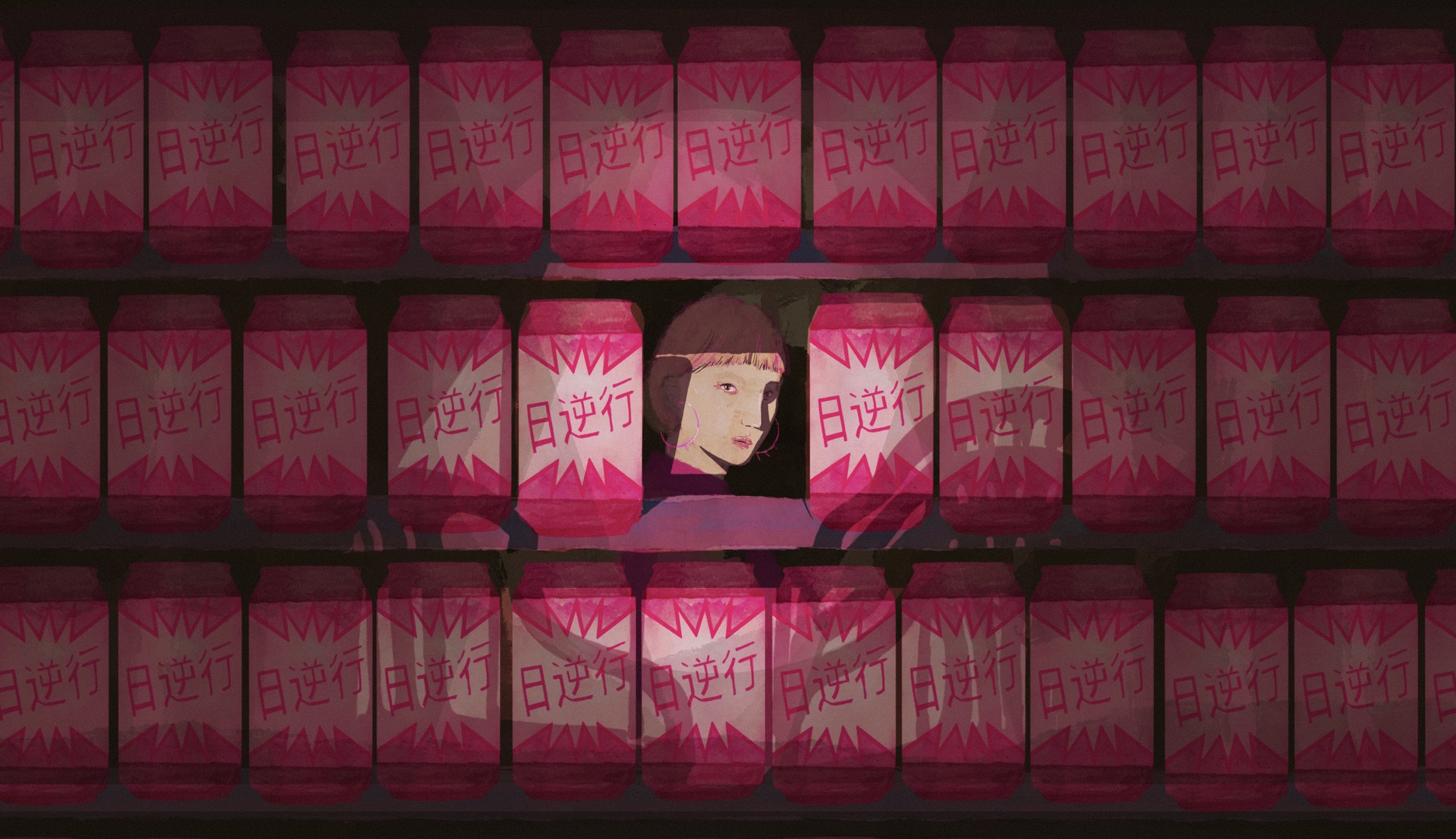
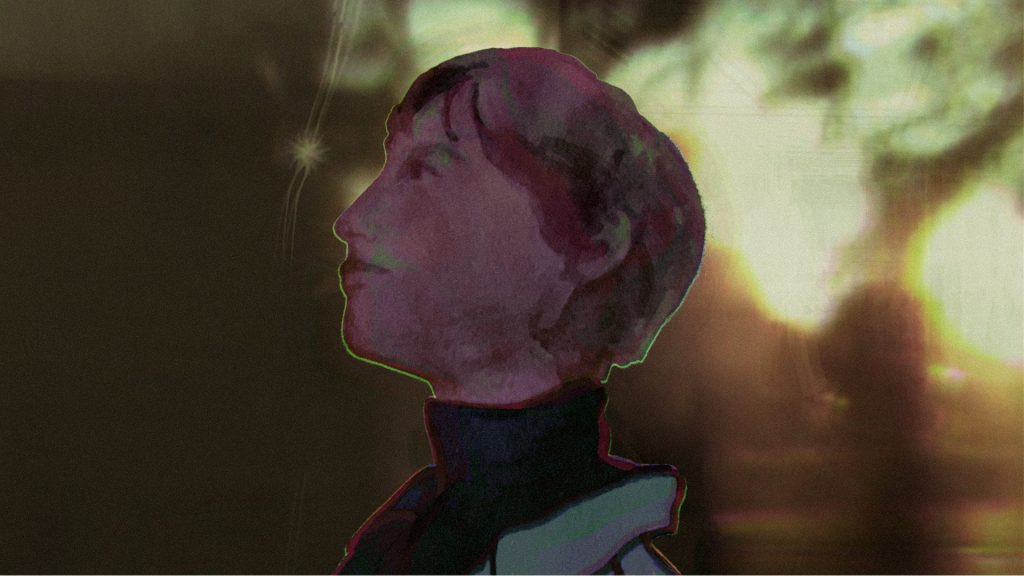
Regarding the visual world: Sun in Retrograde is going to be a hybrid film, combining live action and 2D analogue animation — the approach is both aesthetic and conceptual, and I’ve been curious how to combine both mediums in a way which reflects the ambiguity of memory: how the past is never fully clear, some parts more vivid than others. The mixed visual language also echoes the theme of translation,
capturing the grey areas between mediums that exist between languages, characters, and emotional distances.
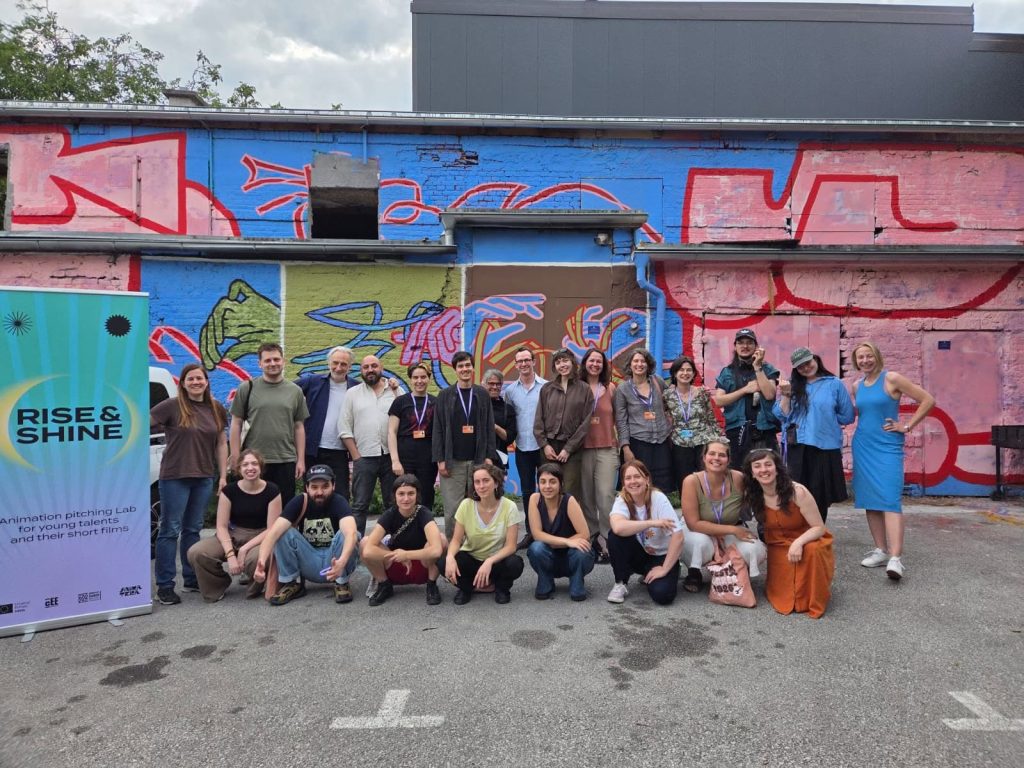
The workshop takes place across Zagreb, online sessions, and Ljubljana.
How important are these international networking opportunities for emerging animation filmmakers today?
I absolutely love and feel super privileged about the number and diversity of opportunities we have in Europe, especially in the animation industry. Independent animation in Europe sometimes feels like a village – eventually everyone gets to know everyone. Many friendships of mine started as collaborations at workshops or meetings at festivals, and nerding about cinema is a shared hobby that connects us. Especially the project development programmes, like Rise & Shine, give the opportunity to network early on — and Zagreb and Ljubljana specifically feel like the right cities for this kind of exchange.
In May 2025, your project Sun in Retrograde received the Baltic Pitching Forum Award. Looking back after a year of further development, how has the project evolved since receiving this recognition?
Oh well…the story itself drifted away from the romantic side and leaned into the “frustration” part. I can’t name a more transformative year than the past one and it naturally affected the development as well. I discovered so many different aspects of storytelling, how to operate with presence and absence within the film language. The theme of “romantic frustration” hasn’t disappeared but it’s been absorbed into something larger: the story of how Tilda has spent her whole life translating herself into shapes that fit other people’s expectations. The same award also granted Sun in Retrograde an automatic invitation to the Baltic Pitching Forum and Networking Event in Vilnius.
How did participating in that international platform influence the project’s development path, and what kind of feedback or connections proved most valuable for you?
It was an amazing one week we spent in Vilnius! It’s such a lovely city (except it’s under military supervision because of the Russo-Ukrainian war…) and the organization of Baltic Pitching Forum is exceptional. Besides meeting cool and inspiring people and making new friends, we participated in a pitch training which was super helpful. It was a safe environment where everyone was supportive and I really appreciate when fellow artists create such an atmosphere without any judgement.
This was the first time we pitched together with Barni – one of my producers – and the feedback on the film was also positive. We won two awards – one for sound post-production and a jury distinction as well. And we established some invaluable connections regarding a possible Lithuanian co-production.
Animated short films often emerge from deeply personal ideas. Without revealing too much, what originally inspired your project?
In the past decade I’ve lived in five different countries, and constantly adapting to new linguistic and cultural environments slowly led to a deep sense of loneliness and alienation. The question of community and belonging became a central theme in my art — the constant moving made it incredibly difficult to have any stability regarding my community or sense of self.
At some point I realised that this self-translation had been part of my life long before I started moving between countries. I’d become fluent in everyone’s language except my own. Tilda’s profession as a translator gave me the structural metaphor I needed for that feeling.
Connecting micro and macro universes is also a returning element in my works, and as I’ve always been interested in astrology, it naturally involved the intention to reframe it for an audience — separating its reputation from the randomly written horoscopes you can find in magazines.
I never intended to write a biopic, and despite the similarities, Tilda is not my cinematic alter ego — but ironically life dropped me into some quite painful situations lately that made me live through the emotional register of many of the scenes I’d written beforehand. Which is quite scary and useful (from the writing point of view) at the same time. I’m currently going through my Saturn return* and I find myself experiencing many of the emotional layers of Tilda’s crisis that I couldn’t have even imagined a year ago when I first came up with the idea.
*In astrology, a “Saturn return” is a transit that occurs when the planet Saturn returns to the exact same position it occupied in the sky at the moment of your birth. Taking about 29.5 years to complete one full orbit, these cycles are periods of profound maturation, structural change, and accountability.
What are the next major steps for the film after Rise & Shine, and what kind of support are you currently looking for in order to move the project forward?
Just a week after the Rise & Shine workshop in Zagreb, we are bringing the project to Annecy to the MIFA Hungarian Partner Pitch (happy dance gif). We are currently seeking a French co-producer and distributor. Otherwise my main task is to finish the script and find the final direction with the visual aesthetic.