

Filmreform 2026 Calls for a New, Professionally Led Film Financing System in Hungary
Source: Filmreform
A newly released white paper by the Filmreform2026 initiative calls for a more transparent, politically independent and professionally driven film financing system in Hungary, alongside a new Film Act and long-term structural reforms aimed at restoring the international competitiveness of the Hungarian film sector. The proposal package was presented on May 8 at the Eurocine Festival by leading representatives of Hungary’s film industry organizations.
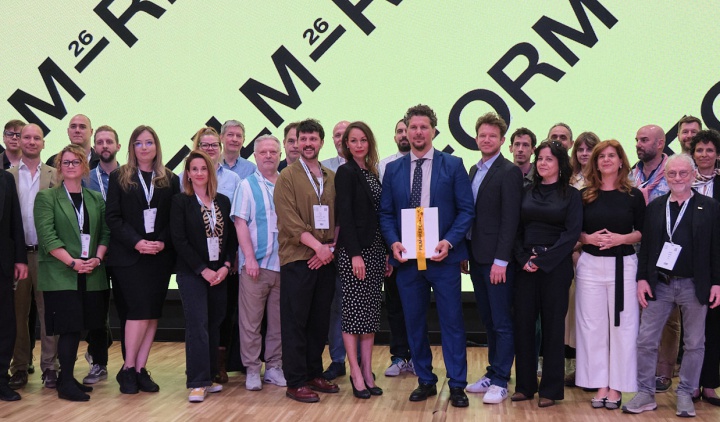
Budapest, 8th of May, 2026. – “We will create a politically independent, multi-window support system where public cultural funding is allocated exclusively on professional grounds,” said Nagy Ervin, cultural policy lead of the TISZA Government, during the presentation of the Filmreform2026 white paper. He pledged the immediate stabilization of Hungary’s film tax rebate system, the depoliticization and reform of the National Film Institute (NFI), open professional tenders for senior NFI positions, the creation of a multi-window funding structure involving professional organizations, and the launch of a joint V4 regional film fund initiative. He also emphasized the need for institutional audits, accountability and decision-making processes based solely on professional criteria within the Hungarian film industry.
Filmreform founder Kolozsi László said the initiative was launched in spring 2026 as a broad professional cooperation platform bringing together film industry organizations, creative communities and educational institutions to formulate proposals concerning the future of Hungarian cinema and audiovisual culture.
Additional organizers of the initiative include Béla Bagota, Dr. Tamás Joó, Dr. Marcell Szy and Bence Szemerey.
The white paper was presented by Julianna Ugrin on behalf of the Hungarian Documentary Filmmakers Association (MADOKE), Dániel Deák representing the Hungarian Film Festivals Association, Ágnes Kocsis representing the Association of Hungarian Feature Film Directors, Péter Becz representing the Hungarian Music Video Directors Association (KLIP Egylet), and Réka Temple on behalf of the Hungarian Animation Producers Association (HAPA). The speakers outlined the key reform proposals and the shared position of participating professional organizations.
According to the document, Hungary’s audiovisual sector continues to possess significant professional expertise and international potential, but the current funding structure only partially utilizes these strengths. The white paper argues that the country’s central film institutions must operate independently from political influence, with transparent public funding mechanisms, predictable governance and internationally competitive financing models. It explicitly states that film funding decisions should not be influenced by ideological or political expectations, and that political appointees should not participate in grant allocation decisions.
The proposal package defines short-, medium- and long-term reform goals covering institutional governance, financing structures, film education and distribution. It outlines a roadmap ranging from the immediate stabilization of the current system to the creation of a sustainable European-standard film ecosystem in Hungary.
Short-term priorities: stabilization and continuity
Among the most urgent priorities, the white paper calls for the stabilization of Hungary’s 30 percent film tax rebate system and the settlement of delayed payments. According to the document, the current uncertainty threatens Hungary’s leading regional position in the film industry, despite foreign productions contributing nearly 3 percent of national GDP and employing more than 20,000 Hungarian film professionals.
The document also warns against repeating the financing vacuum that affected the Hungarian film sector in previous years. It therefore stresses the importance of maintaining operational continuity at the National Film Institute and the Film Office during any institutional restructuring. In addition, the initiative calls for restoring the autonomy of film higher education institutions — particularly the University of Theatre and Film Arts (SZFE) — and proposes audits of decisions made by the National Film Institute, the National Cultural Fund, the Film Office and relevant ministries.
Medium-term goals: restructuring funding and decision-making
A central element of the proposal is the establishment of a differentiated multi-window financing system. Under the proposal, state film funding would be distributed by genre-specific professional committees whose members would be nominated with the involvement of industry organizations. The document argues that feature films, documentaries, animation and other audiovisual formats require more decentralized and specialized decision-making structures due to their differing professional and production logics.
Medium-term proposals also include increasing the role of public broadcasters, commercial television channels and streaming platforms in financing Hungarian productions, while strengthening film distribution networks, arthouse cinemas, festivals and professional film journalism. The initiative also highlights the importance of supporting film and media education, academic research, publishing and professional journals.
Long-term vision: rebuilding Hungary’s film ecosystem
In the long term, the white paper calls for a new Film Act establishing a European-level institutional and financing framework for Hungarian cinema. The goal, according to the document, is to create a stable and transparent regulatory environment capable of guaranteeing artistic freedom, financial predictability and international competitiveness. The proposal also calls for legal guarantees ensuring the independence of the Film Office.
The document also addresses employment and taxation issues affecting film professionals. It argues that the current uncertain and often informal employment structures should be replaced by a more transparent, unified and predictable regulatory framework, including the reintroduction of flexible and preferential tax arrangements adapted to the specific nature of film industry employment.
Regional film production development is also identified as a strategic objective. According to the proposal, strengthening local production infrastructure and rural filmmaking capacities could enhance both the economic impact and the international attractiveness of Hungarian cinema. The long-term vision outlined by Filmreform2026 is for Hungary to evolve from being primarily a production service hub into an internationally recognized creative filmmaking center in Europe.
Participants emphasized that the document presented at Eurocine marks only the first stage of an ongoing professional process that will continue in the coming months with the involvement of additional film organizations and educational institutions.
Participating Organizations and Educational Institutions of Filmreform 2026
Organizations represented on stage
• Art-Mozi Association
• Cine-Collegium Budapest
• Community of Young New Generation Producers
• Association of Film Distributors
• Association of Film Industry Producers and Service Providers (Film Industry Association)
• KLIP Association – Hungarian Music Video Creators Association
• Hungarian Animation Artists Association
Hungarian Animation Producers Association
• ASIFA Hungary – Hungarian Animated Film Creators Association
• Hungarian Documentary Filmmakers Association
• Hungarian Electronic Broadcasters Association
• Hungarian Film and Video Editors Association
• Hungarian Film Festivals Association
• Hungarian Filmmakers Association
• Hungarian Society of Cinematographers
• Hungarian Screenwriters and Dramaturgs Association
• Hungarian Sound Designers Association
• Association of Hungarian Feature Film Directors
• Hungarian Production Designers, Set and Costume Designers Association
• Hungarian Society of Cinematographers – HSC
• Hungarian Producers Union
• Hungarian Producers Association
• Hungarian Assistant Directors Association
• MASZK National Actors Association
• Forum of Higher Education Film Teachers
• National Association of Cinema Operators
• Young and Independent Filmmakers Association
• SzíDoSz – Theatre Workers Union
Participating organizations not represented on stage
• MÚOSZ Film and TV Critics Section
• Hungarian Society for Film Studies
• Hungarian Independent Film and Video Association
• Hungarian Immersive Filmmakers Organization
• Stunt Association Hungary
• Newly established organizations
• Hungarian Film Composers Association
• Hungarian Visual Post-Production Association
Higher education institutions
• Freeszfe Association
• ELTE Department of Film Studies
• Eszterházy Károly Catholic University
• Lumiére Film School
• Metropolitan University
• Moholy-Nagy University of Art and Design (MOME)
• University of Pécs
• University of Szeged – Film Department
• Student Union of the University of Theatre and Film Arts (SZFE)
• Werk Academy